
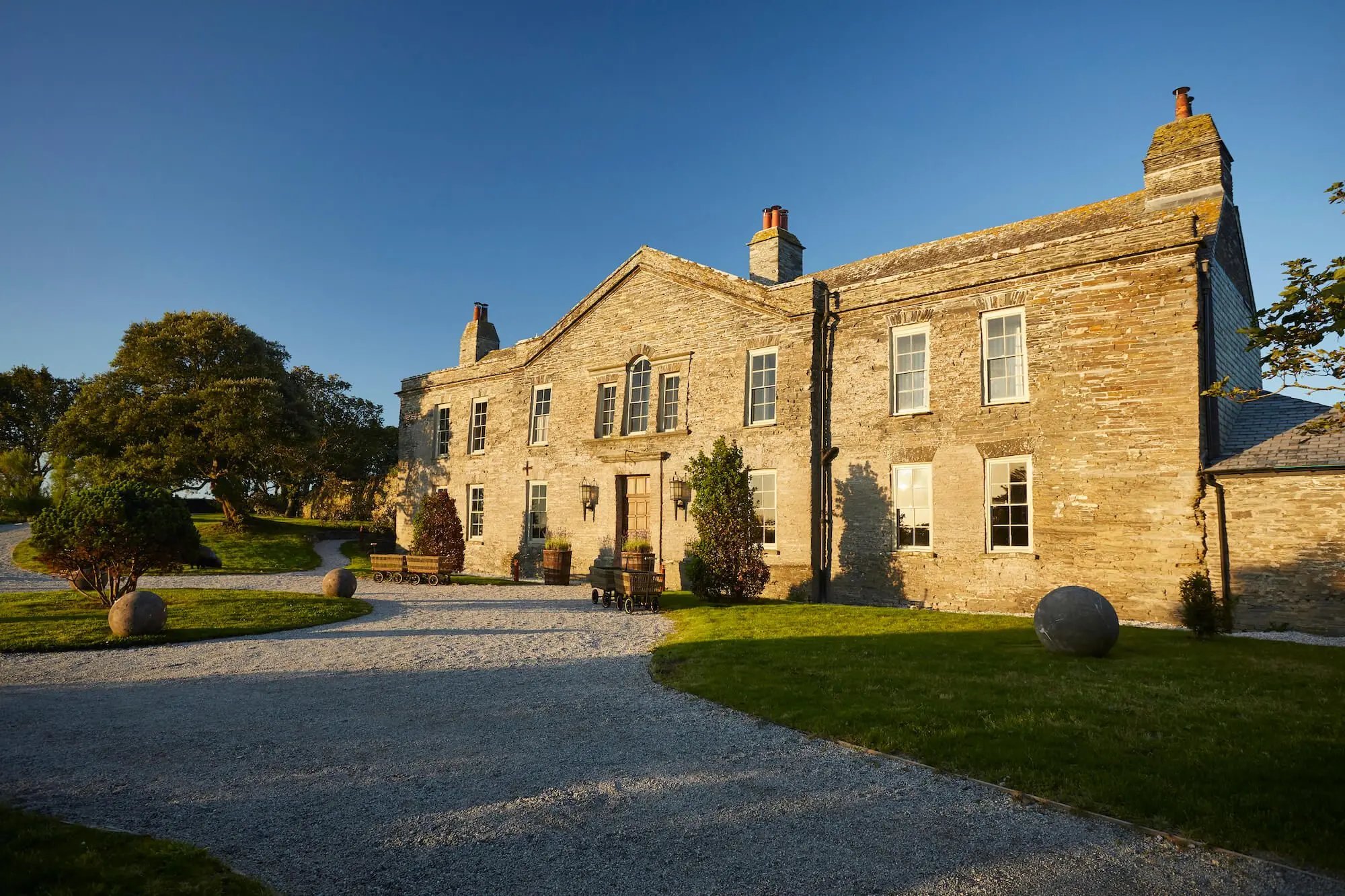
Where to Stay in Cornwall:The Best Hotels
Where you stay shapes the whole trip, and Cornwall’s hotel scene has changed considerably in the past decade. Where once the options were largely traditional country house hotels and seaside B&Bs, the county now offers properties that hold their own against anywhere in Britain. What makes them distinctive is their relationship with the landscape: these are places where the setting is inseparable from the experience.
Where to stay in Cornwall, by area
Before you pick a hotel, pick a coast. Cornwall is small on the map but slow to drive, so where you base yourself shapes the whole trip. Here is how the main areas compare, and who each one suits best.
St Ives (far west)
The artists’ light, three sandy beaches and the Tate on the harbour. Best for first-time visitors and couples who want to walk everywhere. Busiest in peak summer, so book early.
Padstow and Port Isaac (north coast)
Harbour-side food, big surf beaches nearby and dramatic cliffs. Best for foodies and families, and the opening base for our From Coast to Castle tour.
Falmouth and the Roseland (south coast)
Sheltered water, sub-tropical gardens and river estuaries. Best for gentler weather, sailing and couples after somewhere quieter.
Newquay and Perranporth (north coast)
The county’s biggest surf beaches and the most family-friendly infrastructure. Best for families with children and anyone learning to surf.
Penzance and the Lizard (far south-west)
A working town with rail links, St Michael’s Mount offshore and the wildest scenery in the county. Best for explorers who want a base for the far west without the St Ives crowds.
Several of Cornwall’s prettiest villages have small hotels and inns of their own.
On a Kernara tour you do not have to choose: we move you between two or three handpicked hotels across different coasts, so you wake up somewhere new without repacking the car.
Carbis Bay Hotel, St Ives
The five-star Carbis Bay Hotel sits on a 250-acre estate above its own private Blue Flag beach, with views across St Ives Bay that explain in a single glance why artists have been coming here for a century. The property made international headlines when it hosted the G7 summit in 2021, and the attention it received was well deserved. The spa is perched on the clifftop, the restaurants serve seafood landed from the bay below, and the rooms are furnished with the kind of understated elegance that lets the view do the talking.
The Scarlet, Mawgan Porth
Eco-luxury done properly. The Scarlet is built into the clifftop above Mawgan Porth, a quieter stretch of the north coast where the Atlantic views are uninterrupted and the sense of space is extraordinary. The architecture uses natural materials throughout — stone, wood, living roofs — and the Ayurvedic spa is one of the finest in the south-west. The restaurant serves locally sourced food with a lightness of touch that matches the setting. Every room faces the sea.
PIG-at Harlyn Bay
The PIG hotels have built their reputation on a simple idea: grow as much as possible in the kitchen garden, source everything else from within 25 miles, and let the food tell the story of the place. Harlyn Bay is a beautifully restored 15th-century country house a short walk from one of Cornwall’s finest beaches. The interiors mix antique furniture with contemporary comfort, the Lobster Shed serves wood-roasted seafood in the fields above the beach, and the atmosphere is the rare combination of luxury and genuine warmth.
Fowey Hall
Overlooking Fowey harbour from its hilltop position, Fowey Hall is said to be the original inspiration for Toad Hall in Kenneth Grahame’s The Wind in the Willows. The grand Victorian mansion retains its period character — high ceilings, original fireplaces, sweeping lawns — while the interiors have been updated with a deft hand. The views across the estuary from the terrace are among the finest in south Cornwall, and the harbour town of Fowey itself is one of the county’s most appealing.
Camelot Castle Hotel, Tintagel
A Victorian castle perched on the cliffs above Tintagel, where the views along the north Cornish coast are as dramatic as anywhere on the path. The hotel’s guest book reads like a who’s who of the 20th century — Churchill, Ava Gardner, Noel Coward — and the building retains a sense of grandeur that complements its Arthurian setting. The dining room looks out over the ruins of Tintagel Castle, and the proximity to one of England’s most evocative historical sites makes this a hotel where the location is the point.
Mullion Cove Hotel, The Lizard
Perched on the clifftop above the Lizard’s working harbour, Mullion Cove Hotel offers something increasingly rare: uninterrupted sea views with no development in sight. The outdoor hot tub overlooks the Atlantic, the restaurant holds an AA Rosette, and the position at the far southern tip of the county gives it a sense of remoteness that belies its comfort. The Lizard Peninsula itself is Cornwall’s best-kept secret — a landscape of serpentine rock, rare wildflowers and a coastline that feels genuinely undiscovered.
What Makes a Great Cornish Hotel
The hotels that stay with you in Cornwall share certain qualities. They work with the landscape rather than against it. They take their food seriously, drawing on the extraordinary produce available in the county — day-boat fish, pasture-raised meat, vegetables grown in the hotel’s own garden. And they understand that luxury in Cornwall is not about marble lobbies and gold taps; it’s about waking up to the sound of the sea, walking out of your front door onto the coast path, and having someone who knows this place well enough to show you the parts that matter. It’s the same principle behind our luxury walking tours in Cornwall — the place, opened up by someone who knows it.
Topics