
Beyond the Postcards: A Selection of Our Favourite Walks in Cornwall
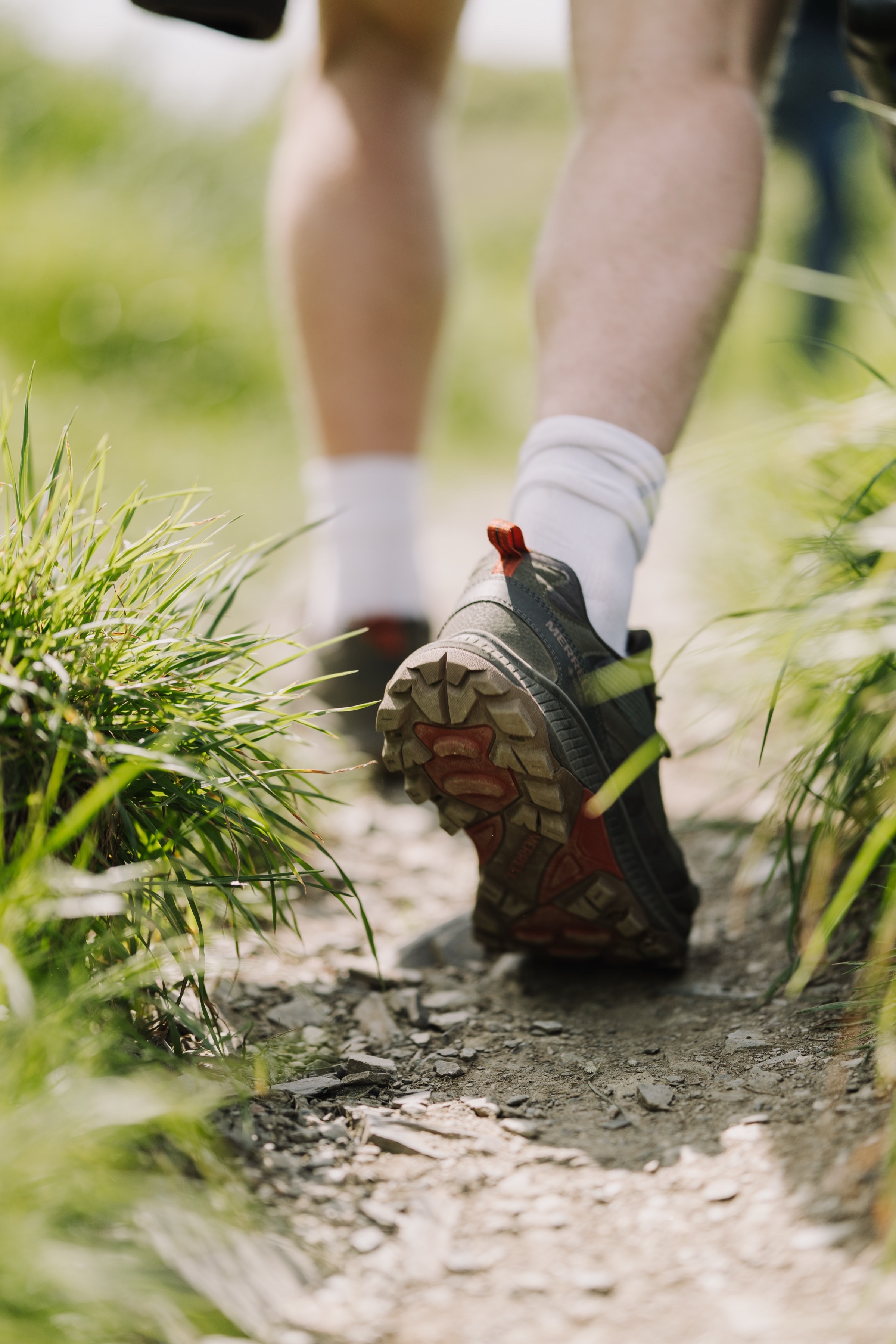
Most people see Cornwall from behind a windscreen. The coast road, the car park, the viewpoint, the photograph. It’s beautiful that way — of course it is. But the Cornwall that stays with you is the one you find on foot, at a pace slow enough to notice the thrift on the cliff edge and the lark above the field.
Here are four walks that show what we mean.
The moor that time forgot
Bodmin Moor doesn’t make the postcards. It should. While the crowds flock to the coast, this granite upland sits quiet and vast in the middle of the county — Bronze Age stone circles, wild ponies, and a silence so complete you can hear the skylarks from half a mile away.
The walk from Minions across to the Cheesewring is the one to start with. The path crosses open moorland scattered with the ruins of a mining industry that once rivalled anything on the coast, past the Hurlers — three stone circles standing in a line, their purpose debated for centuries — and up to the Cheesewring itself, a stack of granite slabs balanced so improbably they look like something a giant left behind. On a clear day, you can see both coasts from the top. On a misty morning — and Bodmin does mist better than anywhere — the stones appear and disappear like thoughts.
Hardly anyone comes up here. That’s part of the point.
The walk to lunch
There’s a Michelin-recognised restaurant perched above Porthleven harbour, and the best way to earn it is on foot. Walk the coast path south from Praa Sands — a long, clean surf beach — along the cliffs to Porthleven, where the harbour wall takes the full force of the Atlantic in winter and the fishing boats bob calmly in summer.
Jude Kereama’s Kota sits right on the harbourside. The menu draws from his Maori, Chinese and Malaysian heritage — think Cornish crab with Asian spice, day-boat fish treated with a lightness that lets the ingredient lead. It’s the kind of lunch where you order one more glass of wine because the sun is on the water and nobody’s rushing you.
The walk back, if you can manage it, is even better. Everything looks different on a full stomach and a slight glow.
Where Arthur was born
The coast path into Tintagel from the north is one of the most dramatic approaches to anything in England. You come along high cliffs, the sea pounding the rocks below, and then the castle appears — or what’s left of it — clinging to a headland that’s half detached from the mainland, connected by a bridge that the wind tries to claim.
This is where Geoffrey of Monmouth placed the conception of King Arthur in the 12th century, and standing there, you understand why. The place has a weight to it. The ruins are 13th-century, but the site has been occupied since the Roman period, and the archaeological finds — fragments of fine pottery, glass from the Mediterranean — suggest whoever lived here was wealthy, connected and deliberately remote. A king’s fortress, perhaps. Or something older.
Below the castle, Merlin’s Cave cuts through the headland at sea level. At low tide you can walk through it, the Atlantic surging at your ankles, and come out the other side to a beach scattered with slate.
The St Ives morning
Not every walk needs a cliff. St Ives on a weekday morning — before the summer crowds — is one of the finest places to simply wander. The harbour, the jumble of narrow streets, the light that drew Barbara Hepworth and Ben Nicholson and Patrick Heron and a hundred others.
Start at the harbour and walk up through the Downalong lanes to the Island — the grassy headland above Porthmeor Beach. Stop at a bakery for a coffee and a saffron bun — the proper Cornish kind, dense and golden with a faint aniseed warmth. Sit on a bench above the beach and watch the surfers. The Tate is a few steps away if you want it. So is the Hepworth studio and garden, where her bronzes stand among the palms exactly as she left them.
The walk takes an hour if you don’t stop. But you’ll stop.
This is what walking in Cornwall looks like — not just the dramatic cliffs and headlands, but the moor, the harbour, the long lunch by the sea and the quiet morning with a coffee in your hands. The postcards show you the surface. The walks show you the rest.
Topics