
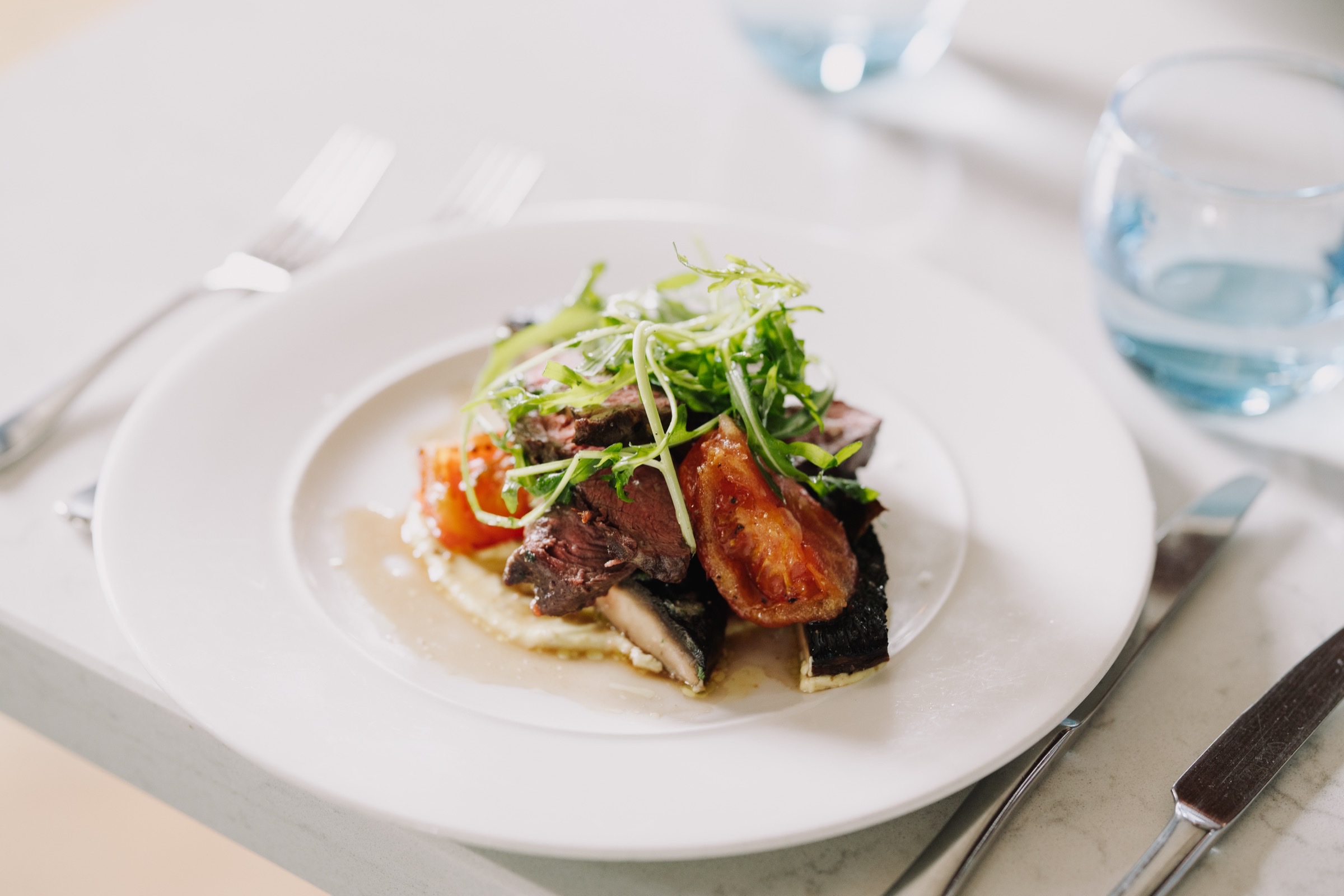
A Guide to Cornwall's Luxury Food & Drink
Cornwall’s food scene is having a moment — though to call it a moment does a disservice to the decades of work that brought it here. The county has long had the raw ingredients: some of the cleanest waters in Britain, a fishing fleet that lands its catch daily, dairy herds that produce cream and butter of extraordinary quality, and a climate mild enough to grow everything from asparagus to wine grapes. What’s changed is the ambition of the people cooking with these ingredients, and the willingness of diners to seek out food that tastes of this particular place. Eating well is among the great things to do in Cornwall.
The Seafood
Cornwall’s relationship with seafood is not a marketing exercise — it is a working industry that has shaped the county’s harbours, economy and culture for centuries. In Newlyn, the largest fishing port in England, trawlers still land their catch before dawn. In Looe, day boats bring in line-caught bass and hand-dived scallops that travel metres, not miles, to the kitchen. In Padstow, the Rick Stein effect transformed a fishing village into a food destination, but the quality of the fish was always there.
The restaurants worth knowing are the ones where the relationship between kitchen and harbour is direct. Outlaw’s Fish Kitchen in Port Isaac serves a daily menu dictated by whatever the boats land that morning — if you arrive expecting to choose, you’ve misunderstood the point. The Sardine Factory in Looe, a Michelin Bib Gourmand holder, sits on the quayside of a working harbour and serves day-boat fish with the kind of simplicity that only works when the ingredients are faultless. And 2 Fore Street in Mousehole, where chef Joe Wardell has been turning Mount’s Bay fish into something quietly remarkable since 2007, remains one of Cornwall’s most consistent kitchens.
Beyond the Harbour
Cornwall’s food story extends well inland. The county’s mild climate and rich pastureland produce dairy of exceptional quality — the clotted cream that defines a Cornish cream tea is made by slowly heating full-cream milk until a thick, golden crust forms on the surface, and the difference between the real thing and a supermarket approximation is significant. Cornish butter, Cornish beef, Cornish lamb — the county’s agricultural output is world-class and increasingly recognised as such.
The farm-to-table movement has deep roots here. The PIG-at Harlyn Bay grows as much as possible in its own kitchen garden and sources everything else from within 25 miles — a philosophy that sounds simple but requires an extraordinary network of local producers. Pattard Restaurant on the Hartland Peninsula operates from a converted milking parlour on a working farm, where the chefs cook seasonal dishes from the fields and farms around them. And Edie’s in Carlyon Bay, a Michelin-listed neighbourhood bistro, demonstrates that Cornwall’s dining ambitions are not confined to the coast.
The Wine
Cornwall’s emerging wine scene is perhaps the most surprising element of its food story. The county’s south-facing slopes, sheltered valleys and increasingly warm growing seasons have produced vineyards that are turning heads nationally. Camel Valley, near Bodmin, has been producing award-winning sparkling wine for over two decades. Knightor, in the Fowey valley, makes both still and sparkling wines from grapes grown on ancient Cornish soil. And a new generation of smaller producers — many of them too small to distribute beyond the county — are experimenting with grape varieties and techniques that take advantage of Cornwall’s unique microclimate.
A wine tasting at Ogo, the restaurant at Bedruthan Hotel, offers a curated introduction to the Duchy’s most exciting vineyards, paired with a Cornish tasting menu built around foraged seaweed, clifftop berries and the day’s catch. It’s the kind of experience that most visitors don’t associate with Cornwall — and that’s precisely what makes it worth seeking out.
The Cream Tea
No guide to Cornish food would be complete without addressing the cream tea, and it should be stated plainly: the Cornish method is jam first, cream on top. This is non-negotiable within the county, regardless of what Devon may claim. The scone should be fresh, the cream should be clotted (not whipped, never squirted from a can), and the jam should be strawberry. The setting matters too — a cream tea in the Harbour Loft on St Michael’s Mount, with views across the bay, is a different experience entirely from one consumed in a motorway service station.
Dining on a Kernara Tour
Every Kernara tour weaves carefully chosen dining experiences into the itinerary — not as an afterthought, but as an integral part of the journey. A candlelit dinner inside a 14th-century hilltop castle overlooking the mining heartlands. Michelin-starred seafood in a fisherman’s cottage on the harbour. A farewell meal in a converted milking parlour where the chefs know the farmer by name. The food is always Cornish, always seasonal, and always chosen because the restaurant has a story worth telling. Good food runs through all our luxury guided walking tours, chosen for the story as much as the plate.
Topics