
Cornwall's Top Five Beaches
Cornwall has more than three hundred beaches, and arguing about the best ones is practically a local sport. Some are wide and windswept, built for surfing and long walks. Others are tucked into cliff faces, reached by scrambles and rope-aided descents, the kind of places that feel like you’ve discovered something. These five are the ones that stay with you — each for a different reason.
Pedn Vounder
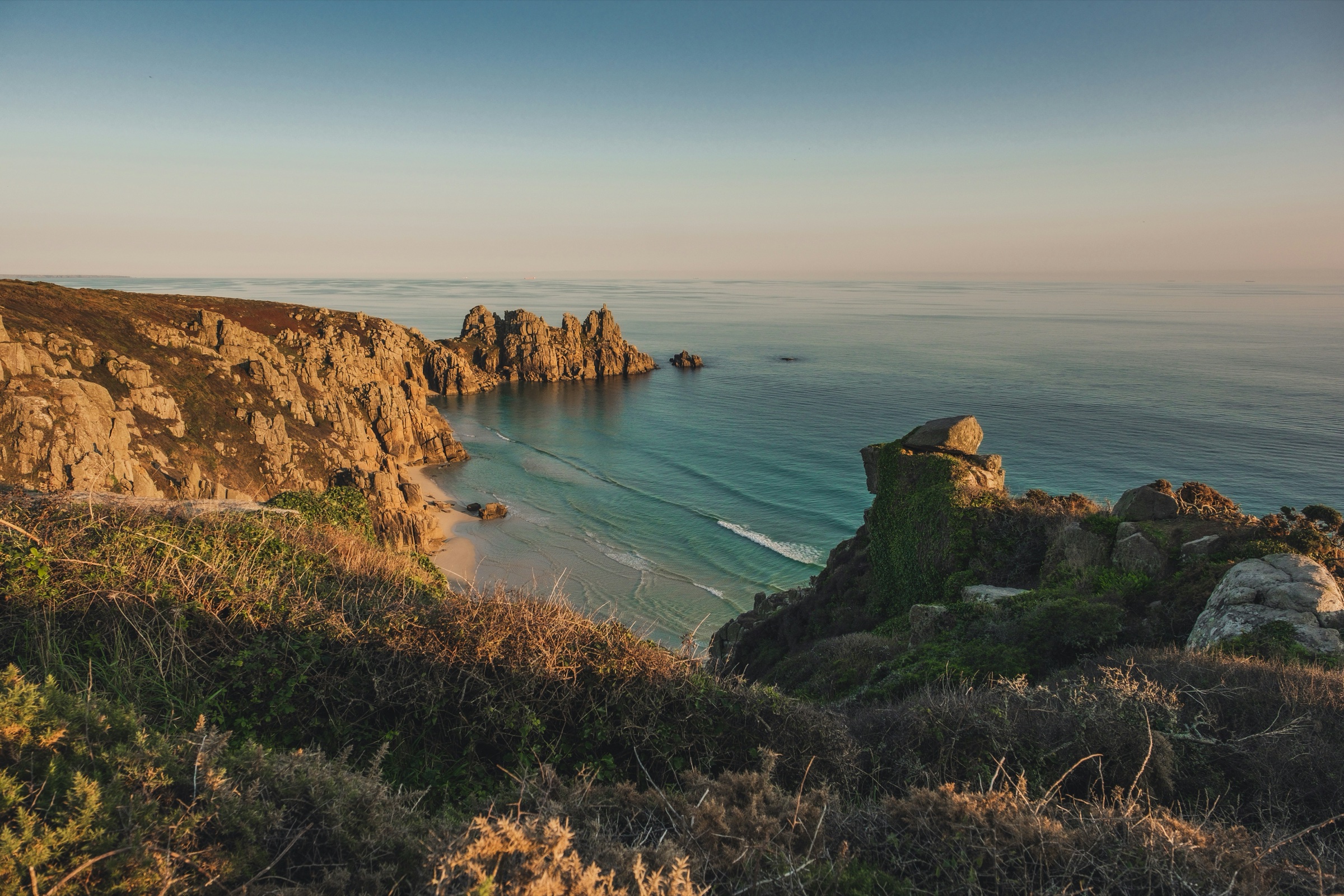
Below the headland at Logan Rock, Pedn Vounder sits at the base of the cliffs like something displaced from the Caribbean — white sand, water that shifts between turquoise and deep green, and a silence broken only by waves. Getting down requires a steep scramble that puts off the casual visitor, which is part of why the beach feels the way it does. From the coast path above, the view is almost absurd in its beauty. You don’t need to reach the sand — though if you do, you won’t want to leave.
Fistral Beach
Fistral is Cornwall’s most famous surf beach, and it earns its reputation every day. A wide crescent of sand facing the full force of the Atlantic, with waves that build and break with a consistency that draws surfers from across the world. The energy here is different from the quieter coves — Fistral is alive with it, the sound of the water constant and percussive. Even if you never pick up a board, standing on the beach at Fistral with the spray on your face is something you feel in your chest.
Kynance Cove
On the Lizard Peninsula, Kynance Cove is a place that looks invented. The serpentine rock — deep green, oxblood red, shot through with white — shifts colour depending on the light and the tide. At low water, the sand opens up between the stacks and you can walk through natural arches into smaller coves beyond. The turquoise water against the dark rock is dramatic in a way that photographs flatten. You need to be there, with the wind and the smell of salt, to understand it.
Marazion
Marazion’s beach is defined by what rises from the water at its far end — St Michael’s Mount, a castle on a tidal island connected by a cobbled causeway that the sea covers twice a day. At low tide you walk across ancient stones to the island. At high tide the Mount floats on the water, distant and medieval. The beach itself is long and quiet, with views across Mount’s Bay, and the light here in the early morning — soft, silvered, still — is the kind that makes you stop and stand for a while.
Polperro
Polperro is not a beach in the traditional sense, and that’s why it belongs on this list. It’s a harbour — a tight, narrow inlet lined with old fishermen’s cottages, their walls whitewashed or painted in faded blues and greens. The village was a smuggling port for centuries, and the lanes are so narrow in places that two people can barely pass. There is a small cove beside the harbour, where the water is clear and the boats sit at anchor, but the real draw is the village itself — the way it folds around the water, compact and weathered and entirely its own. Sit on the harbour wall with a cup of tea and watch the fishing boats come and go. It is enough.
Topics