
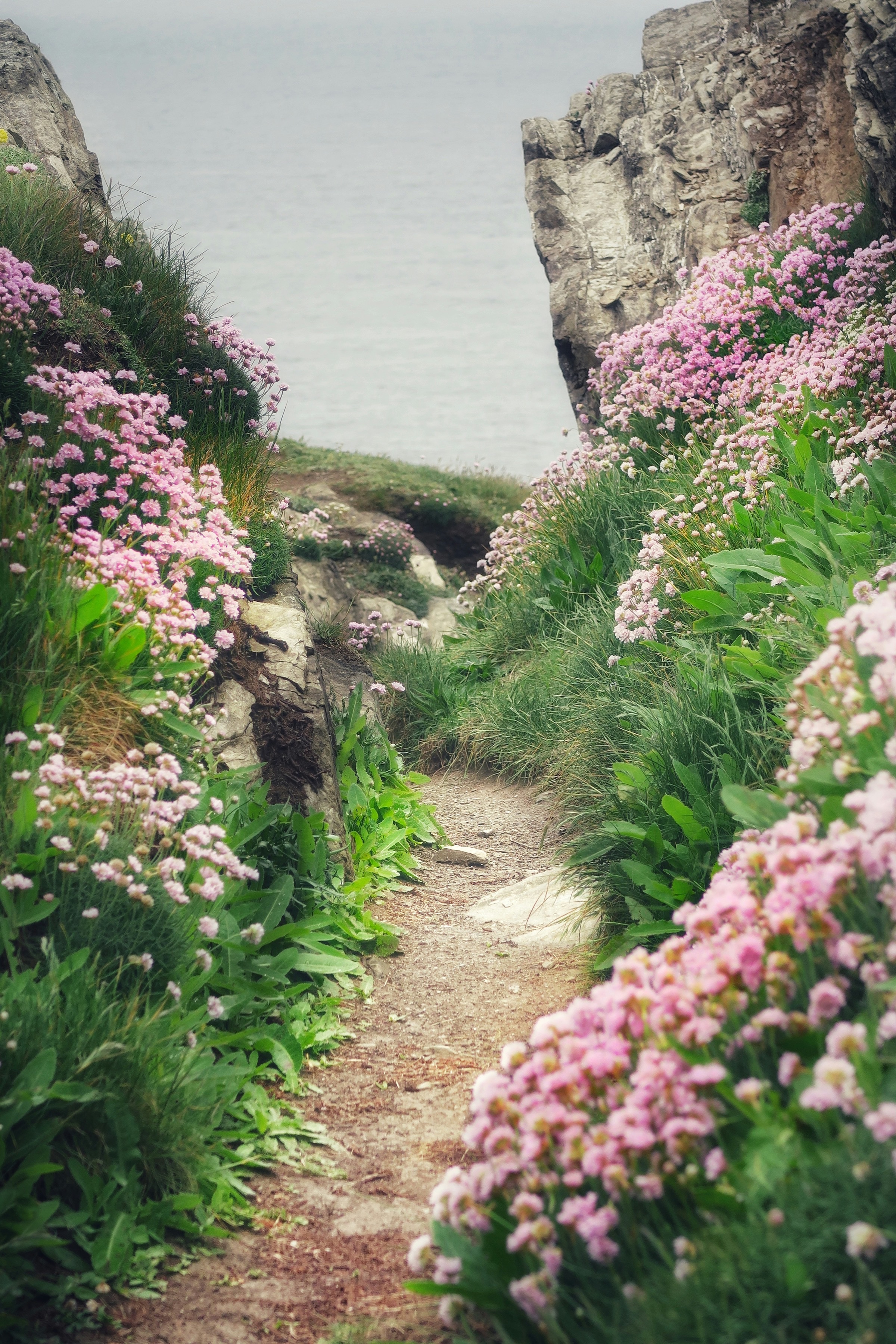
Beyond the Postcards: A Guide to Walking in Cornwall
Cornwall’s South West Coast Path stretches for over 300 miles around the county’s perimeter, and it represents some of the finest coastal walking anywhere in the world. But the sheer scale of it can be daunting. Where do you start? How fit do you need to be? And which sections are actually worth your time?
Here’s what we’ve learned from years of walking these paths with guests from across the world. If you have come to the trail through The Salt Path, our companion piece on walking the South West Coast Path in Cornwall sets out where it runs and which stretches to choose.
The Terrain
Cornwall’s coast path is not flat. That’s the first thing to understand. The path follows the contours of the coastline, which means constant ascents and descents as you cross each headland and valley. A six-mile walk might involve more climbing than you’d expect from a day in the mountains — the difference is that the climbs are shorter and interspersed with level stretches along the cliff tops.
The paths themselves are generally well-maintained, though conditions vary by section and season. The north coast tends to be more exposed and rugged, with dramatic cliffs and open moorland. The south coast is gentler, with sheltered harbours, wooded estuaries and more protected walking. Both have their appeal, and the choice often comes down to personal preference rather than fitness.
How Fit Do You Need to Be?
Less fit than you might fear. Our tours typically cover four to six miles per day, at a pace set by the guide to suit the group. You don’t need to be a serious walker — just comfortable on your feet for a few hours at a time and able to handle the occasional steep section. The key is to take it at your own pace. Cornish walking is about absorbing the landscape, not racing through it.
That said, some sections are more demanding than others. The stretch from Zennor to St Ives on the north coast involves sustained cliff-edge walking with significant elevation changes. The Lizard Peninsula is gentler and more forgiving. A good guide will match the route to the group’s ability, and there’s always the option to take a shorter route or spend a morning at the hotel if your legs need a rest.
What to Wear
Layers are the answer to Cornwall’s changeable weather. A breathable waterproof jacket is essential year-round — not because it always rains, but because the coast can turn from sunshine to sea mist in twenty minutes. Walking boots with good ankle support are advisable for the coast path, though well-fitted trail shoes work for the less demanding sections. Avoid brand-new footwear; anything you wear should be broken in before you arrive.
Underneath, dress for the conditions: a moisture-wicking base layer, a fleece or insulated mid-layer, and waterproof trousers for wet days. A sun hat and sunscreen are as important as rain gear from May onwards — the coastal exposure means you’ll burn faster than you expect. Walking poles are a matter of personal preference; some people swear by them on the steeper descents, others find them a nuisance.
The Sections Worth Knowing
For dramatic scenery: The tin coast between St Just and St Ives, where clifftop engine houses stand as monuments to Cornwall’s mining past and the Atlantic stretches unbroken to the horizon.
For wildlife: Godrevy headland, where a large colony of grey seals basks on the rocks below the lighthouse that inspired Virginia Woolf.
For history: Tintagel to Boscastle, where Arthurian legend meets medieval harbour architecture and the coast path traces one of the most evocative stretches of English coastline.
For tranquillity: The Roseland Peninsula on the south coast, where sheltered creeks and subtropical gardens feel a world away from the exposed north.
For a challenge: The section around Dodman Point, a dramatic headland with an Iron Age cliff fort and some of the most rewarding views on the south coast.
Walking with a Guide
The practical difference a local guide makes is significant. They know which paths flood after rain, which sections catch the wind, where the best lunch spots are, and how to time a walk around the tides. The less tangible difference is in the stories — the history, the geology, the local knowledge that transforms a walk from exercise into experience. Cornwall is a landscape that rewards understanding, and the right guide gives you exactly that, start with exploring our guided walking tours in Cornwall.
Topics