
Walking The Salt Path in Cornwall: The Trail from the Film, in Comfort
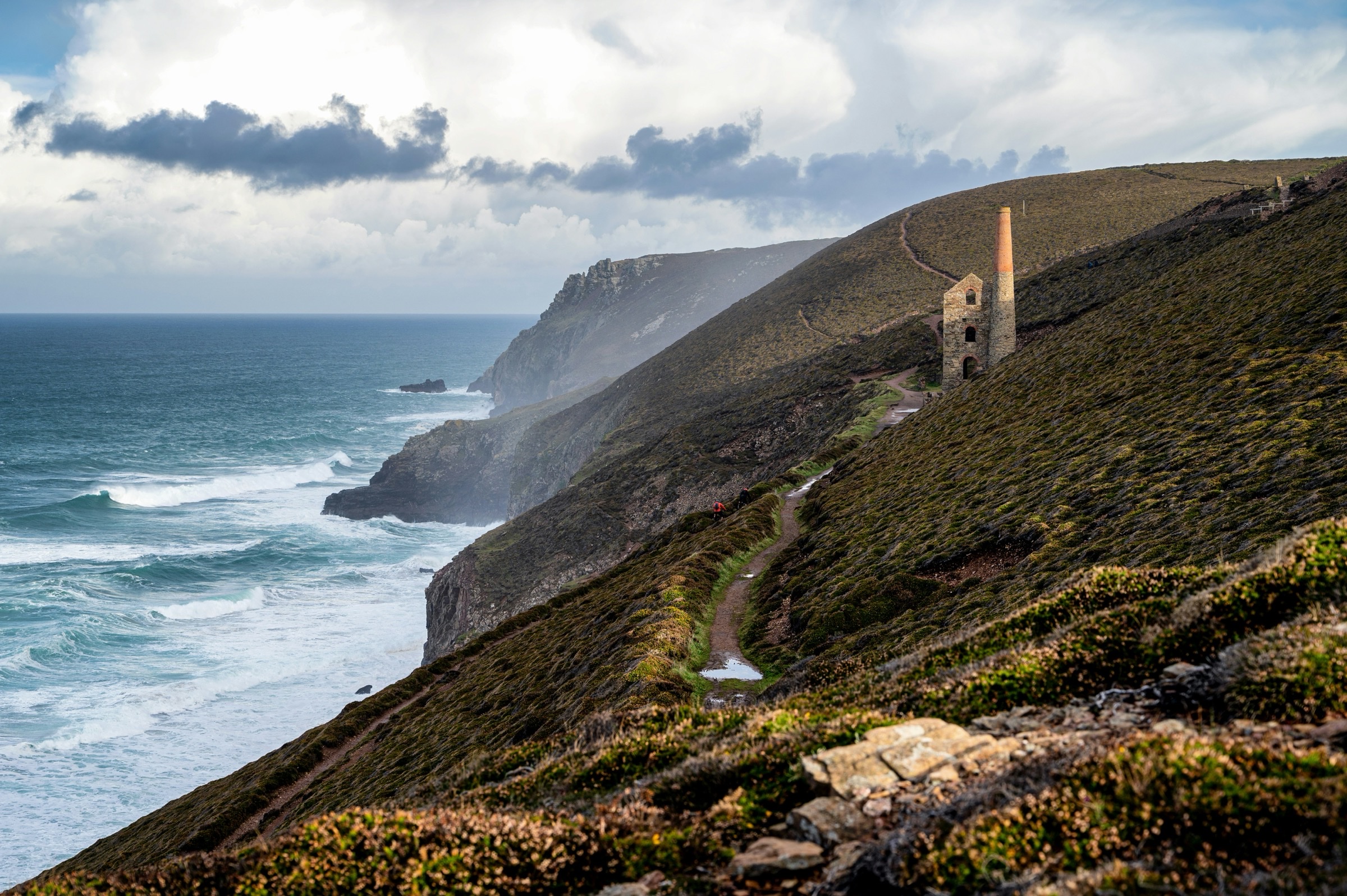
There’s a moment on the cliffs at Botallack that stops almost everyone. You come around the headland and the engine houses appear below you, perched on ledges above the Atlantic, and the path, a thin ribbon of trodden earth between the gorse and the drop, simply carries on past them, the way it has for two hundred years.
That path is the South West Coast Path, and this year it has been playing the lead role in The Salt Path, now showing in cinemas across America. If the film has put the trail on your map for the first time, you’re asking the right question: not whether to walk it, but how.
What the path actually is
The South West Coast Path runs for 630 miles around England’s south-western peninsula, from Minehead in Somerset to Poole Harbour in Dorset. It began as the coastguards’ working route: they needed to see into every smugglers’ cove, which is why it hugs the coastline so faithfully, and why the views never stop. Walking all of it takes seven or eight weeks.
Almost nobody does that, and almost nobody needs to. The heart of the path is Cornwall: over 300 of those miles trace the Duchy’s perimeter, and they hold the scenes that stay with you. Tintagel on its island headland. The harbours of Boscastle and Port Isaac. The tin coast, Land’s End, the serpentine coves of the Lizard.
The Cornwall you see on screen
The wild, salt-scoured openness that fills the screen in The Salt Path is this coastline. The path crosses into Cornwall at Marsland Mouth, then runs south-west through Bude, Boscastle and Tintagel, past Port Isaac, and on to Bedruthan Steps, where sea stacks march across the sand like a giant’s stepping stones. Beyond lie the mining cliffs of St Agnes, the seals at Godrevy, and the far west, through Zennor and Botallack to Land’s End, where the path feels closest to the edge of the world.
What the camera can’t convey is the smell of it, salt and gorse and bracken after rain, or the deep satisfaction of a pint at the end of a walking day. For those, you have to come.
What walking it is really like
Honesty is worth more than romance here, so: the coast path is not flat. It drops into every valley and climbs every headland, the Atlantic weather changes its mind twice before lunch, and tides matter.
None of this should put you off. It should shape how you do it. Walk it unburdened, with a daypack, a picnic and a vehicle meeting you at the road, and four to six unhurried miles a day is enough to feel you’ve earned the view and the dinner. Our guide to walking in Cornwall goes into the terrain, the fitness and the kit in proper detail.
Walking it the comfortable way
That last part is where we come in. Every Kernara tour walks the finest Cornish stretches of the South West Coast Path in small groups, with a local expert guide, a support vehicle always on hand, and a luxury hotel at the end of each day.
Which stretch is yours depends on the Cornwall you’re drawn to. The Hidden North walks the wild northern reaches, from the Marsland Valley to Tintagel. Legacy & Landscapes takes the tin coast and the Lizard. From Coast to Castle gathers the greatest hits into a single week, and Tors to Shore follows the gentler southern path through du Maurier’s Fowey. The practical questions about fitness, kit and pace are answered in our FAQs, and the honest answer to most of them is: easier than you fear, better than you hope.
The man who walked all of it
One of our guides has a particular claim on this trail. David, who leads The Hidden North, grew up on Cornwall’s northern tip and holds the record for the fastest unsupported walk of the full 630 miles: 13 days, 13 hours and 43 minutes. He has some 20,000 wilderness miles behind him across the rest of the world, too. Ask him which of them all he’d walk again tomorrow, and he doesn’t reach for the Rockies. He points out of the window.
That’s the thing about this path. People cross the world for it, films are made on it, and the people who know it best still can’t quite believe it’s theirs. Come and walk a stretch of it, the unforgettable part without the hardship, and you’ll understand why.
Topics