
Where to Stay in Cornwall:The Best Towns and Areas
Deciding where to stay in Cornwall is the most important call you will make when planning a trip here. The county is small on the map but slow to drive, with narrow lanes and two very different coasts, so your base decides what you see each day. This guide covers the best places to stay in Cornwall, England, who each one suits, and how to get there, written by the local guides who walk this coast every week.
The short answer. First visit and want everything on foot: St Ives. Food and harbours: Padstow. Somewhere quieter and softer: Fowey or St Mawes. The wild far west: Penzance. No car: Penzance, Truro or St Ives, all on the railway. Better still, split your week between two bases on different coasts.
How to choose where to stay in Cornwall
Start by picking a coast. The north coast faces the Atlantic: big cliffs, surf beaches and dramatic walking. The south coast is gentler, with sheltered harbours, wooded river estuaries and gardens. The far west, around Land’s End and the Lizard, is the wildest of all. Our guide to the Cornish coast explains how they differ.
Then think about driving. Allow an hour for a thirty-mile journey, and more in summer. A base in the middle of where you want to explore saves hours in the car, and if you are not driving at all, a town on the railway makes everything easier.
The best places to stay in Cornwall
St Ives: best for first-time visitors
St Ives has the artists’ light, several sandy beaches within a few minutes’ walk of each other, and the Tate on the seafront. Everything is walkable, the food is excellent, and the coast path to Zennor starts at the edge of town. It is busy in July and August, so book early. It has its own railway station, on the branch line from St Erth. Nearby Carbis Bay is quieter, with a walk along the cliffs into town.
Padstow and Rock: best for food lovers
Padstow is a working harbour on the Camel Estuary with some of the best restaurants in the county. Across the water, reached by a short passenger ferry, Rock and Polzeath have wide sandy beaches and a more relaxed pace. Good for families and anyone who plans their day around lunch. The Camel Trail, a flat cycle and walking path along the river, starts in town. A few minutes west, Harlyn Bay is a quieter beach with one of the area’s best hotels.
Port Isaac and Tintagel: best for the wild north coast
For the dramatic cliffs of the north coast, base yourself around Port Isaac, the fishing village made famous by Doc Martin, or Tintagel, home to the castle of Arthurian legend. Both are small, so choice of places to stay is limited, but the coast path between them is some of the finest walking in England. Boscastle, a dramatic harbour squeezed between cliffs, is a short drive north of Tintagel.
Newquay and Mawgan Porth: best for surf beaches and clifftop retreats
Newquay has the biggest surf beaches in Cornwall, plenty of lifeguarded sand and the most family-friendly infrastructure in the county, plus a railway station and Cornwall’s airport. It is livelier than most places on this list. A few miles north, Mawgan Porth is far quieter, with a sandy cove, clifftop hotels and the great slate stacks of Bedruthan Steps a short walk along the coast path. See our guide to Cornwall with kids.
St Agnes: best for the mining coast
St Agnes is a village of galleries and pubs on the north coast, ringed by some of the most striking walking in Cornwall: the climb up St Agnes Beacon, and the clifftop engine house at Wheal Coates above Chapel Porth. Inland, Redruth sits at the heart of Cornwall’s mining country, part of the Cornwall and West Devon Mining Landscape World Heritage Site. A quieter alternative to St Ives for walkers.
Falmouth, St Mawes and the Roseland: best for the gentle south coast
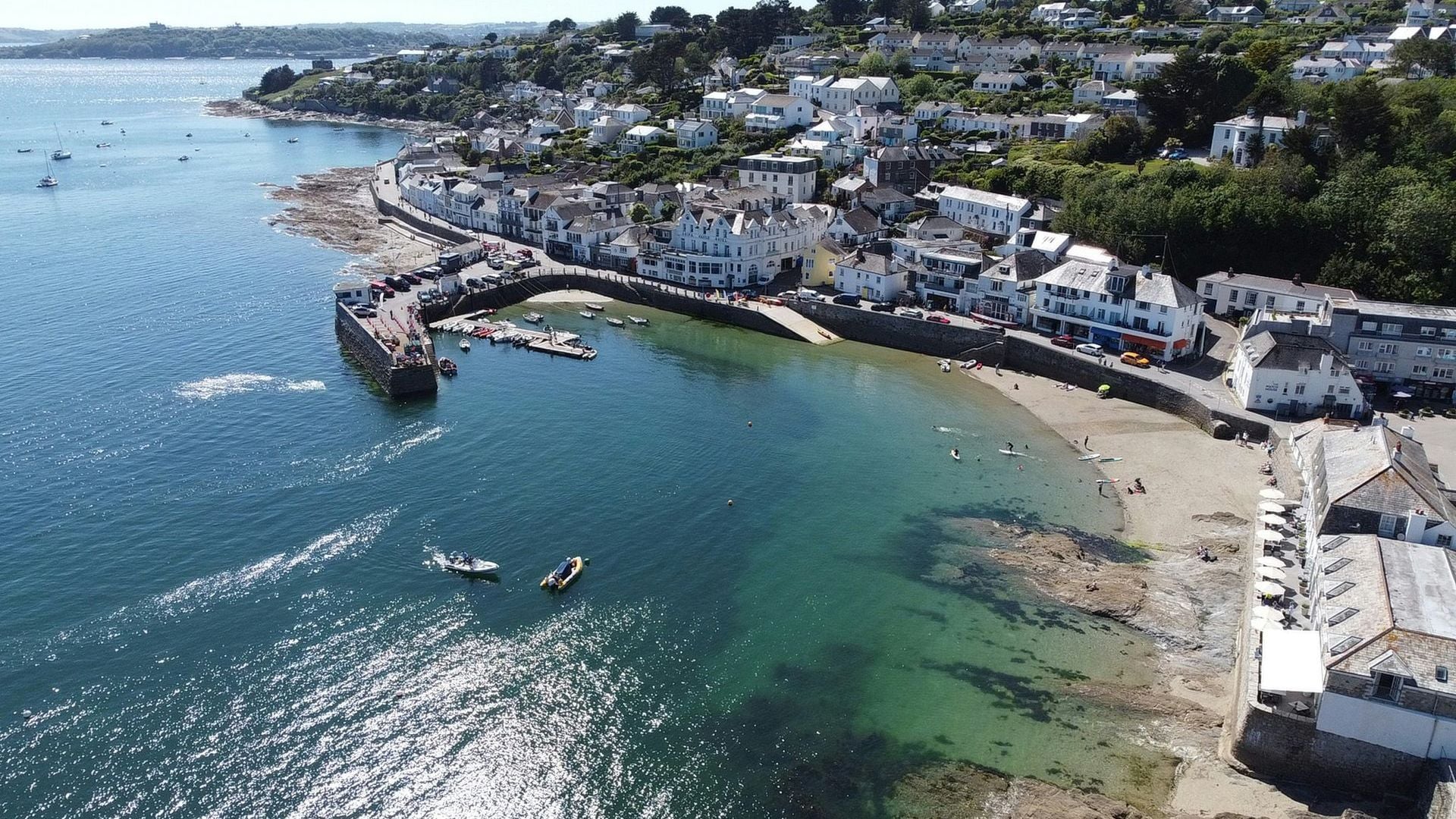
Falmouth is a proper harbour town with independent shops and restaurants, the National Maritime Museum and Pendennis Castle, and it is on the railway, on a branch line from Truro. Across Carrick Roads, St Mawes and the Roseland Peninsula are the most peaceful corner of the south coast: a small harbour village, the creekside church at St Just in Roseland and quiet coves. A passenger ferry links St Mawes with Falmouth, and the King Harry Ferry carries cars across the River Fal. Ideal for couples who want to slow right down.
Fowey, Mevagissey and Charlestown: best for literary history and harbours
Fowey is a steep, pretty harbour town on the Fowey Estuary, and the place Daphne du Maurier called home. It has some of the best walking on the south coast, with a ferry across to Polruan and the Hall Walk around the estuary. Along the coast, Mevagissey is a working fishing harbour close to the Lost Gardens of Heligan, and Charlestown is a Georgian port that doubled for Truro in Poldark. The nearest station to Fowey is Par, a short drive away; St Austell is on the main line.
Looe and Polperro: best for classic fishing villages
In the south east of the county, Looe is a busy harbour town split by its river, and Polperro is one of the most photographed fishing villages in Cornwall. The coast path between them is a classic half-day walk. Looe is on a scenic branch line from Liskeard.
Penzance, Mousehole and Land’s End: best for the far west
Penzance is a working town at the end of the main railway line from London, with St Michael’s Mount across the bay. It makes a practical base for Land’s End, Sennen Cove, the Minack Theatre and the Tin Coast around Pendeen and Botallack, without the summer crowds of St Ives. Mousehole and neighbouring Newlyn, a short drive along the bay, are among the prettiest harbours in the county.
The Lizard: best for remote coastal walking
The Lizard Peninsula is the most southerly point of mainland Britain, with serpentine rock, rare wildflowers and Kynance Cove. Villages such as Mullion and Cadgwith are small and quiet. Come here for walking and space, not nightlife.
Truro: best city base without a car
Truro is Cornwall’s only city, with a cathedral, good shopping and a station on the main line. It sits in the middle of the county, so most places are within an hour, and it is a sensible base if you are relying on trains and buses.
Where to stay in Cornwall without a car
Without a car, stay on the railway. Penzance and Truro are on the main line from London Paddington, and St Ives, Falmouth, Newquay and Looe are on short branch lines. Buses connect most towns, but services to smaller villages can be infrequent, especially outside summer. For the journey down, see London to Cornwall.
One base or two?
For a week or more, we suggest two bases on different coasts: three or four nights on the north coast, then the rest on the south coast or in the far west. You see far more of the county and spend far less time in the car. Our Cornwall vacation itinerary shows how a 7 or 10-day trip fits together.
On a Kernara tour the decision is made for you: six nights across three handpicked hotels, two nights in each, on different stretches of coast, with luggage moved for you. For the hotels themselves, see our guide to the best hotels in Cornwall.
Topics