
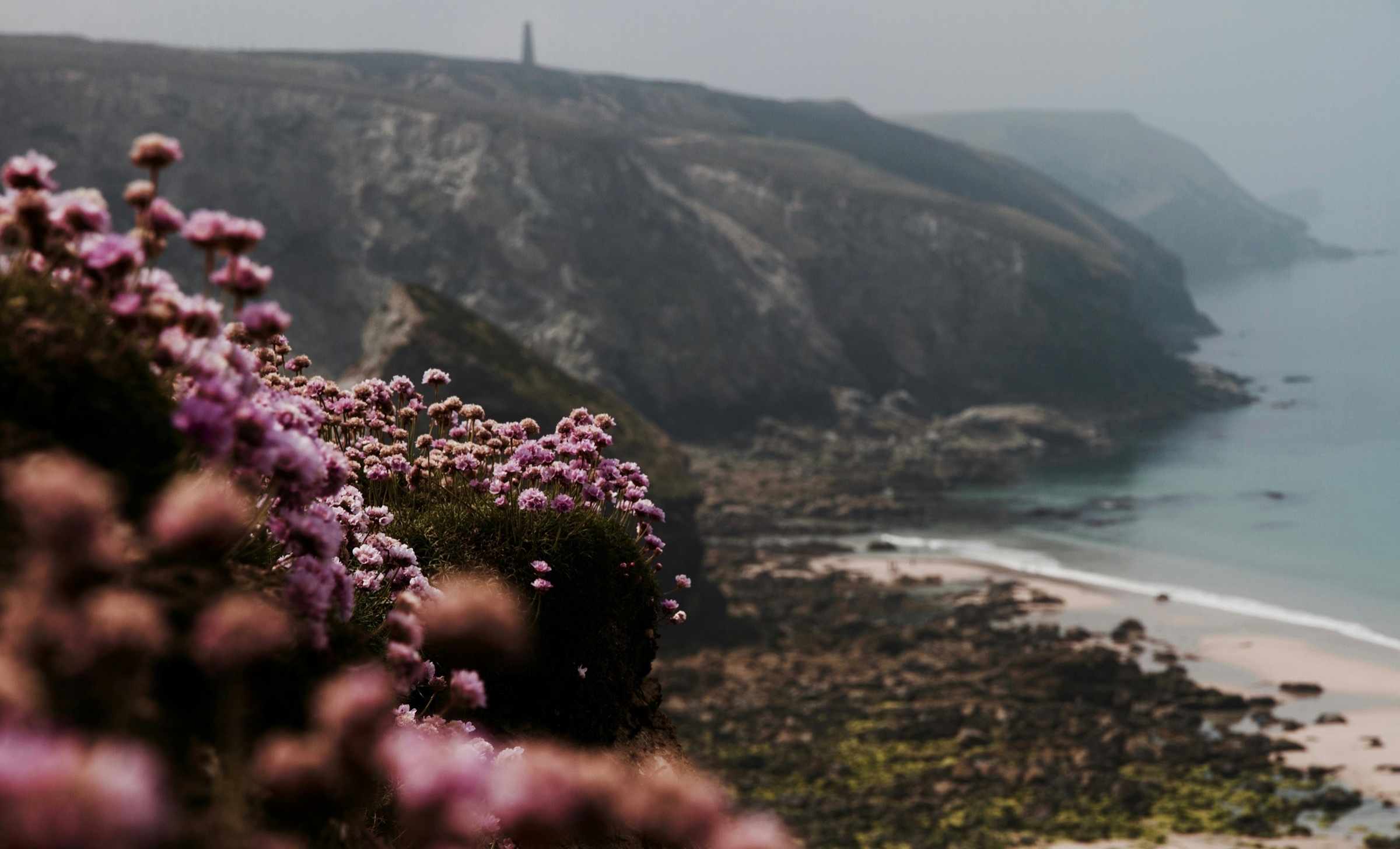
The Cornwall Coast
The Cornwall coast is the reason people come and the reason we stay. Wrapped around England’s far south-western peninsula, which reaches further into the Atlantic than anywhere else in the country, it runs for hundreds of miles and changes character constantly: surf-battered cliffs on one side, sheltered wooded creeks on the other, and the South West Coast Path connecting every inch. This is our guide to the coast of Cornwall, written by the guides who walk it for a living: how it fits together, where it is at its best, and how to see it. The coast is where most of the best things to do in Cornwall are found. Every Kernara tour is built around it.
The two coasts: North versus South
Cornwall really has two coasts, and they could hardly be more different. The north coast is the Atlantic coast, wild and exposed, all high cliffs, surf beaches and ruined mine engine houses, running from Bude down through Newquay and St Ives to Land’s End. The south coast, sometimes called the Cornish Riviera, is softer and greener: sheltered harbours, wooded river estuaries and sub-tropical gardens, from the Lizard round to the River Tamar. Between the two, the far west around Land’s End and the Lizard is wildest of all, and holds the most westerly and most southerly points of mainland Britain. Most visitors try to see a stretch of each.
Walking the South West Coast Path
The single best way to experience the Cornwall coast is on foot. Roughly 300 miles of the South West Coast Path trace the county’s edge, the longest and arguably finest stretch of England’s longest waymarked trail. You do not need to walk all of it: a morning between two coves takes in cliffs, a beach and usually a harbour with somewhere to stop for lunch. Our guide to walking in Cornwall has the best sections for a half-day or a full one, and walking The Salt Path in Cornwall follows the trail’s route through the Duchy from end to end.
The best beaches on the Cornwall coast
The coast is fringed with some of the finest beaches in Britain, and they split along the same north-south lines. The north coast has the surf and the space: Fistral at Newquay, Watergate Bay, Perranporth, and the white sand of Porthcurno and Sennen in the far west. The south coast has the sheltered, swimmable coves: Kynance on the Lizard, the calm sands of the Roseland, and hidden gems reached only on foot. For the towns and landmarks strung along the way, see our guide to the best places to visit in Cornwall.
Wildlife on the Cornish coast
Cornwall’s coast is one of the richest places for wildlife in Britain. Grey seals haul out on beaches and in coves right around the county, most reliably at Mutton Cove near Godrevy. In summer, pods of dolphins and the occasional basking shark pass offshore, and the cliffs of the far west are home to choughs, the red-billed crows that appear on Cornwall’s coat of arms. Take binoculars, and watch the water as much as the land.
Where the coast is at its most beautiful
Certain stretches stop you in your tracks: the engine houses at Botallack, the turquoise water at Kynance Cove, St Michael’s Mount rising from Mount’s Bay, and the cliffs around Tintagel. We have gathered the finest in our guide to the must-see views in Cornwall, so we will not repeat them all here. The short version: the far west and the Lizard for drama, the south coast for gentler beauty.
Fishing villages along the coast
Some of the loveliest places on the Cornwall coast are its harbour villages, where granite cottages tumble down to a working quay: Mousehole and Cadgwith in the far west and the Lizard, Port Isaac and Boscastle on the north coast, Fowey and Polperro on the south.
Planning your visit
- Best time to go: late spring and autumn (May, June, September, October) for long light, calmer seas and no crowds. See our Cornwall vacation itinerary for how to structure a week.
- Where to stay: base yourself on both coasts rather than one. Our guide to where to stay in Cornwall has the best hotels by area.
- Getting here: most international guests travel down from London by rail or private transfer. See travelling from London to Cornwall.
Walk the Cornwall coast with Kernara
The coast is Cornwall’s masterpiece, and it rewards someone who knows it: which cove to reach at low tide, which path to walk with the light behind you, where the seals will be. Every Kernara Cornwall tour is built around this coastline, with a local guide, handpicked hotels and nothing to plan. Enquire to walk it with us.
Topics